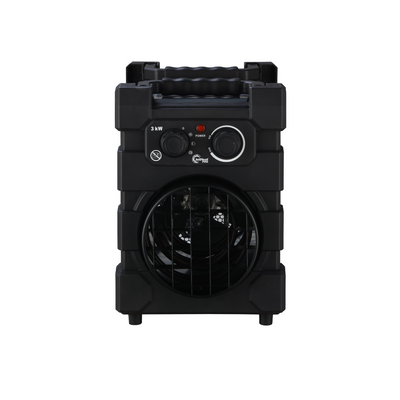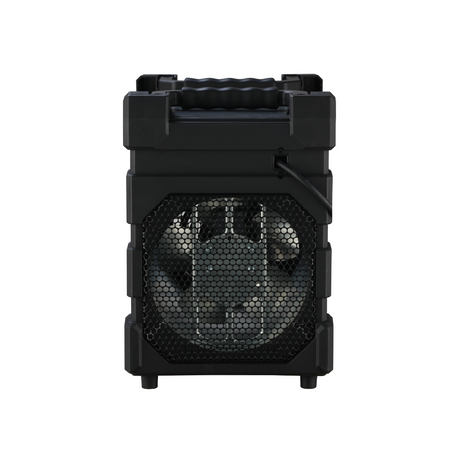

Garages, workshops, warehouses and industrial spaces are very different from normal rooms inside a home. They are often colder, draughtier, less insulated and harder to heat evenly. That means the best heater for a garage or workshop is not always the same heater you would choose for a bedroom, home office or living room.
A small domestic heater may be useful for light occasional warmth, but it may struggle in a large garage or practical working environment. For better results, you usually need a heater that suits the size of the space, the insulation level, the available power supply and the way the area is used.
This guide explains how to choose the best electric heater for a garage, workshop, warehouse, construction area or industrial space, including portable heaters, workshop fan heaters, higher output heaters and three phase options.
You can also browse our industrial portable heaters, view our 9kW and above portable heaters, or compare all portable heating units.
What Is The Best Heater For A Garage Or Workshop?
The best heater for a garage or workshop is usually a portable electric fan heater or industrial portable heater with enough output for the size and condition of the space.
Garages and workshops often need stronger airflow than normal domestic rooms. A fan heater helps move warm air around the space, which can be especially useful if you are working at a bench, near tools, around machinery or in an area with cold surfaces.
For smaller garages and hobby workshops, a 2kW or 3kW electric heater may be a good starting point. For larger workshops, warehouses and industrial spaces, you may need a higher output heater such as 5kW, 9kW, 15kW or 30kW, depending on the building and power supply.
| Space | Suggested Starting Point | Best Heater Type | Best CoolEasy Range |
|---|---|---|---|
| Small garage | 2kW to 3kW | Portable fan heater | 3kW and below portable heaters |
| Single garage used occasionally | 2kW to 3kW | Workshop heater | Industrial portable heaters |
| Double garage | 3kW to 5kW | Higher output fan heater | Industrial portable heaters |
| Workshop | 3kW to 5kW plus | Workshop or industrial heater | Industrial portable heaters |
| Warehouse or industrial unit | 9kW plus | High output industrial heater | 9kW and above portable heaters |
| Large industrial area | 15kW to 30kW | Three phase heater | Three phase portable heaters |
This is only a guide. The correct heater depends on room size, insulation, ceiling height, draughts, how often doors are opened and the available electrical supply.
Why Garages And Workshops Are Harder To Heat
A garage or workshop usually loses heat faster than a normal room. Even if the floor area is similar to a bedroom or office, the heating requirement can be very different.
This is because garages and workshops often have:
- Concrete floors that feel cold underfoot
- Large doors that let heat escape quickly
- More draughts around doors, windows and roof spaces
- Less wall, roof or floor insulation
- Higher ceilings than domestic rooms
- Cold tools, equipment, shelving and machinery
- More frequent door opening
- Large open areas with less soft furnishing to hold warmth
This is why a small domestic heater may feel underpowered in a garage, even if it works well in a bedroom or home office.
Portable Heater Or Industrial Heater?
The difference between a domestic portable heater and an industrial heater is usually output, airflow, build quality and suitability for the environment.
A compact portable heater is useful for occasional top up warmth in a small space. An industrial portable heater is designed for more demanding environments where you need stronger heating, better airflow and a more robust design.
| Choose A Portable Heater If... | Choose An Industrial Heater If... |
|---|---|
| The garage is small | The space is large, cold or draughty |
| You only need occasional warmth | You use the space regularly for work |
| You are heating one person or one small area | You need to warm a wider working zone |
| You want a simple plug in domestic option | You need a rugged heater for practical environments |
| The room is insulated and easy to warm | The space has high ceilings, large doors or poor insulation |
If you are heating a garage or workshop frequently, start by looking at our industrial portable heaters.
What Size Heater Do I Need For A Garage?
The heater size you need depends on the garage size and how cold the space becomes.
For many small garages, a 2kW or 3kW heater is a sensible starting point. Larger garages, colder spaces and poorly insulated buildings may need more output.
| Garage Type | Suggested Starting Point | Notes |
|---|---|---|
| Small garage or hobby area | 2kW | Useful for occasional warmth near a work area |
| Single garage | 2kW to 3kW | Good starting point for general garage use |
| Large single garage | 3kW to 5kW | More output may be needed if poorly insulated |
| Double garage | 5kW plus | Depends heavily on insulation and ceiling height |
| Garage workshop | 3kW to 5kW plus | Choose based on working area and time in use |
For a full guide to heater sizing, read our What Size Heater Do I Need? guide.
What Size Heater Do I Need For A Workshop?
A workshop often needs more heating power than a normal garage because it may be used for longer periods and may need to keep staff, tools, materials or work areas comfortable.
The right output depends on whether you want to heat the whole workshop or just one working zone.
| Workshop Type | Suggested Starting Point | Best Option |
|---|---|---|
| Small hobby workshop | 2kW to 3kW | Portable fan heater |
| Medium workshop | 3kW to 5kW | Workshop heater or industrial fan heater |
| Large workshop | 9kW plus | Industrial portable heater |
| Warehouse workshop | 15kW to 30kW | Three phase industrial heater |
If you only need warmth at a bench or workstation, targeted heating may be more practical than trying to heat the whole building. If you need the wider workshop to feel comfortable, you will need to size the heater more carefully.
Best Electric Heater For A Small Garage
For a small garage, a compact 2kW workshop style fan heater is often a strong starting point.
You want something that is easy to move, simple to operate and suitable for a practical environment. A small domestic heater may be enough if the garage is insulated and only used occasionally, but a garage focused heater will usually be a better fit.
The Olympus 2.0kW Portable Fan Heater for Garages and Workshops is a useful option for garages, workshops, small warehouses, trade vans, site work and garden buildings.
Best Electric Heater For A Workshop
For a workshop, you usually need a heater that combines strong airflow, durable construction and enough power to warm the working area.
A 3kW heater is a good starting point for many smaller workshops. Larger or colder spaces may need 5kW or more.
The Olympus Pro 3.0kW Workshop Heater is a practical option for workshops and garages that need more heating output than a small domestic heater.
You can also compare the Trotec 3.0kW TDS 20 R Electric Fan Heater and the Trotec 5.0kW TDS 30 R Electric Fan Heater for stronger workshop and commercial heating.
Best Heater For A Warehouse Or Industrial Unit
Warehouses and industrial units need more careful heating planning because they are often large, open and high ceilinged. A small heater may only warm the person standing next to it and may not make the wider space comfortable.
For larger industrial spaces, high output heaters are usually required. These may include 9kW, 15kW and 30kW heaters, depending on the building and the power supply available.
Browse our 9kW and above portable heating units or compare our three phase portable heaters.
Single Phase Vs Three Phase Garage And Workshop Heaters
Power supply is one of the most important things to check before buying a higher output electric heater.
Smaller portable heaters are often used in domestic or light commercial spaces. Higher output industrial heaters may need a three phase power supply. This is common in workshops, warehouses, factories and industrial buildings, but it is not something every home garage will have.
| Power Type | Typical Use | What To Check |
|---|---|---|
| Standard domestic power | Small portable heaters and light garage use | Check the product power requirement before use |
| Higher output single phase | Some workshop and commercial heaters | Check socket type, circuit capacity and product specification |
| Three phase power | Industrial heaters, warehouses and large workshops | Requires a compatible three phase electrical supply |
Always check the product specification before buying. If you are unsure whether your building has the right power supply, speak to a qualified electrician before ordering a high output heater.
How Much Does It Cost To Run A Garage Heater?
The running cost of a garage heater depends on the heater output, how long it runs and your electricity price per kWh.
The basic formula is:
Running cost = heater power in kW x hours used x electricity cost per kWh
For example, a 3kW heater uses up to 3kWh per hour when running at full power. A 5kW heater uses up to 5kWh per hour at full output.
| Heater Output | Electricity Used Per Hour At Full Power | Example Cost At 30p Per kWh | Typical Use |
|---|---|---|---|
| 2kW | 2kWh | 60p per hour | Small garages and hobby spaces |
| 3kW | 3kWh | 90p per hour | Garages and small workshops |
| 5kW | 5kWh | £1.50 per hour | Larger workshops and commercial spaces |
| 9kW | 9kWh | £2.70 per hour | Industrial spaces |
| 15kW | 15kWh | £4.50 per hour | Large industrial areas |
| 30kW | 30kWh | £9.00 per hour | Very large industrial spaces |
These figures are examples only and are based on full power output at 30p per kWh. Your actual cost will depend on your electricity tariff and how the heater is used.
A heater with thermostat control may not run at full power continuously once the space reaches the set temperature. However, draughty garages and workshops may cause a heater to run for longer than it would in a well insulated room.
For more detail, read our electric heater running cost guide.
Should You Heat The Whole Garage Or Just One Area?
In many garages and workshops, it is more practical to heat the area you are using rather than trying to warm the whole building.
This is known as targeted heating. It can be useful if you only work at one bench, in one corner, near a vehicle, or around a specific workstation.
Targeted heating may be best if:
- You only use part of the garage
- The space is large and poorly insulated
- You only work there for short periods
- You want to avoid wasting energy heating unused areas
- You need quick warmth around a workbench or task area
Whole space heating may be better if staff are working across the area, if materials need to be kept at a stable temperature, or if the workshop is used for long periods each day.
Electric Fan Heaters For Garages And Workshops
Electric fan heaters are popular for garages and workshops because they push warm air into the space quickly.
This can be useful in practical environments where you do not just want warmth directly beside the heater. Air movement helps distribute heat across the working area.
Fan heaters are useful for:
- Garages
- Hobby workshops
- Small warehouses
- Trade spaces
- Construction areas
- Garden workshops
- Temporary heating
When choosing a fan heater, check the output, airflow, power supply and whether the heater is built for the type of environment you want to use it in.
Are Electric Heaters Safe For Garages?
Electric heaters can be used safely in garages and workshops when they are suitable for the environment and used according to the manufacturer’s instructions.
Garages can contain items that need extra care around heat, such as paints, aerosols, fuels, cleaning products, cardboard, sawdust or fabrics. Because of this, safe placement matters.
Always follow these basic safety tips:
- Place the heater on a stable, level surface
- Keep the heater away from flammable materials
- Do not cover the heater
- Keep air inlets and outlets clear
- Do not place the heater where it can be knocked over
- Keep cables away from walkways, tools and vehicle movement
- Check the power supply is suitable for the heater
- Do not use extension leads unless the manufacturer permits it
- Turn the heater off when the space is unattended
- Keep the heater clean and free from dust build up
If you are using a heater in a dusty workshop, check and clean it regularly. Dust can affect airflow and performance.
How To Heat A Garage More Efficiently
The right heater is important, but the building itself makes a big difference. A draughty, uninsulated garage will always be harder to heat than a sealed, insulated one.
Seal Draughts Around Doors
Garage doors are a common source of heat loss. Gaps around the edges can let cold air in and warm air out. Draught reduction can help the heater work more effectively.
Improve Insulation Where Possible
Insulating garage walls, doors, ceilings and floors can make a major difference. Even small improvements can help the space retain heat for longer.
Use Targeted Heating
If you only work in one area, position the heater safely near that working zone rather than trying to heat the whole garage.
Keep Doors Closed Where Practical
Every time a large garage or workshop door opens, warm air escapes. Keeping doors closed while heating can reduce wasted energy.
Choose The Correct Output
An underpowered heater may run continuously without making the space comfortable. An oversized heater may be unnecessary for a smaller garage. Match the output to the space.
Use Thermostat Controls
A thermostat can help maintain a comfortable temperature without running at full output constantly.
Best Heater For A Garage Gym
A garage gym has slightly different needs from a workshop.
You may want the space to warm up quickly before training, but you may not need it to stay as warm as a living room. Airflow and safe positioning are important, especially if the garage contains gym equipment, mats and moving space.
For a small garage gym, a 2kW heater may be enough if the space is insulated. For larger or colder garage gyms, a 3kW or 5kW workshop heater may be more practical.
Make sure the heater is placed safely away from exercise areas, cables, mats and equipment.
Best Heater For A Car Garage
If the garage is mainly used for car maintenance, cleaning, detailing or storage, you may only need heat in specific areas.
A portable workshop heater can be useful because you can position it where you are working, then move it when the job is complete.
For car garages, check:
- Whether the heater has enough output for the space
- Whether it can be positioned away from the vehicle and flammable materials
- Whether the cable can be kept clear of tools and movement
- Whether the garage has a suitable power supply
- Whether you are heating one work area or the whole space
Best Heater For A Commercial Workshop
A commercial workshop often needs a more durable heating solution than a small home garage.
If staff are working in the space for long periods, comfort, reliability and safe operation become more important. Larger workshops may also need more than one heater or a higher output unit, depending on the layout.
For commercial workshops, consider:
- Total floor area
- Ceiling height
- Number of staff
- How often doors open
- Workstation layout
- Power supply
- Required temperature
- Whether the heater is for temporary or regular use
For commercial and industrial environments, view our industrial portable heaters.
Best Heater For A Warehouse
Warehouses are among the hardest spaces to heat because they are usually large, open and high ceilinged.
Before choosing a warehouse heater, decide whether you need to heat the full space or only certain zones. In many cases, zone heating around work areas can be more practical than trying to warm the entire warehouse.
Warehouse heater choice depends on:
- Building size
- Ceiling height
- Insulation
- Door openings
- Loading bay activity
- Staff working zones
- Power supply
- Temporary or ongoing use
For larger warehouse spaces, compare our 9kW and above portable heaters and three phase portable heaters.
Recommended Garage And Workshop Heaters
Here are some useful CoolEasy options depending on the size and type of space you need to heat.
Best For Small Garages: Olympus 2.0kW Portable Fan Heater
The Olympus 2.0kW Portable Fan Heater for Garages and Workshops is a practical option for garages, workshops, small warehouses, trade vans, site work and garden buildings.
It is a good starting point for smaller spaces where you need portable, practical heat rather than a domestic bedroom style heater.
Best For Workshops: Olympus Pro 3.0kW Workshop Heater
The Olympus Pro 3.0kW Workshop Heater is a stronger option for garages, workshops and practical work areas.
It is suitable where you need more output than a compact domestic heater and want something better suited to a working environment.
Best For Larger Workshops: Trotec 3.0kW And 5.0kW Electric Fan Heaters
The Trotec 3.0kW TDS 20 R Electric Fan Heater and Trotec 5.0kW TDS 30 R Electric Fan Heater are useful for workshops, garages, construction sites and unheated indoor environments.
They are worth considering when you need stronger airflow and more heat output for larger or colder spaces.
Best For Industrial Spaces: Olympus 9.0kW Industrial Space Heater
The Olympus 9.0kW Industrial Space Heater is designed for larger spaces where smaller workshop heaters may not provide enough warmth.
It is a high output option for more demanding heating requirements.
Best For Large Industrial Heating: Olympus 15.0kW Industrial Heater
The Olympus 15.0kW Industrial Heater is suited to larger commercial and industrial spaces that need a much higher level of heat output.
Before choosing a heater at this level, always check that the power supply and space requirements are suitable.
Best For Very Large Spaces: Olympus 30.0kW Industrial Heater
The Olympus 30.0kW Industrial Heater is a high output option for very large industrial spaces, warehouses and demanding environments.
This type of heater is best considered for large buildings where smaller heaters would not be suitable.
Garage And Workshop Heater Buying Checklist
Before choosing a garage or workshop heater, ask:
- How large is the space?
- Is it a single garage, double garage, workshop or warehouse?
- How well insulated is it?
- Are there draughts around doors or windows?
- How high is the ceiling?
- How often will the heater be used?
- Do you need full space heating or targeted heating?
- Will people be working in the space for long periods?
- What power supply is available?
- Does the heater need to be moved around?
- Do you need 2kW, 3kW, 5kW or a higher output industrial heater?
- Would a three phase heater be required?
If you are unsure, start by comparing our industrial portable heaters or speak to the CoolEasy team for advice.
Garage And Workshop Heater FAQs
What is the best heater for a garage?
The best heater for a garage is usually a portable electric fan heater or workshop heater with enough output for the size and condition of the space. A 2kW or 3kW heater can be a good starting point for smaller garages, while larger spaces may need more power.
What is the best electric heater for a workshop?
For a workshop, choose a heater with strong airflow, suitable output and a rugged design. A 3kW or 5kW workshop heater is often more suitable than a small domestic heater.
Is a 2kW heater enough for a garage?
A 2kW heater may be enough for a small, reasonably insulated garage or for targeted warmth near a work area. Larger, draughtier or colder garages may need 3kW, 5kW or more.
Is a 3kW heater enough for a workshop?
A 3kW heater can be suitable for many small workshops, but the right size depends on the workshop area, insulation, ceiling height and how long the space is used.
What size heater do I need for a double garage?
A double garage may need more than a small 2kW heater, especially if it is poorly insulated. A 3kW to 5kW heater may be a better starting point, but the exact requirement depends on the space.
Are electric heaters good for garages?
Yes, electric heaters can be good for garages when correctly sized and used safely. They are simple, portable and do not require fuel storage, but the heater must suit the space and power supply.
Are fan heaters good for workshops?
Fan heaters can be very useful in workshops because they move warm air around the space. This helps warm working areas more quickly than a heater that only warms the air immediately around it.
Do I need a three phase heater?
You may need a three phase heater for larger industrial spaces or high output heating. Always check the product specification and confirm that your building has a compatible power supply.
How much does it cost to run a garage heater?
Running cost depends on the heater output and your electricity tariff. A 3kW heater uses up to 3kWh per hour at full output. At 30p per kWh, that would cost up to 90p per hour.
How can I make my garage heater more efficient?
Reduce draughts, improve insulation, keep doors closed, use targeted heating, choose the correct output and use thermostat controls where available.
Can I leave a garage heater unattended?
Always follow the manufacturer’s instructions. As a general rule, do not leave portable heaters running unattended, and keep them away from flammable materials.
What is the best heater for a warehouse?
Warehouses usually need high output industrial heaters or zone heating, depending on the building size and how the space is used. Larger areas may require 9kW, 15kW or 30kW heaters.
Final Advice: Choose A Heater Built For The Space
The best garage or workshop heater is the one that matches the environment.
For a small garage, a 2kW or 3kW portable fan heater may be enough. For a workshop, choose a more rugged heater with strong airflow. For warehouses and industrial units, look at higher output heaters and check whether a three phase power supply is required.
To get the best results, think about room size, insulation, draughts, ceiling height, power supply and whether you want to heat the whole space or just a working area.
Explore our industrial portable heaters, compare 9kW and above portable heating units, or speak to the CoolEasy team for help choosing the best heater for your garage, workshop or warehouse.