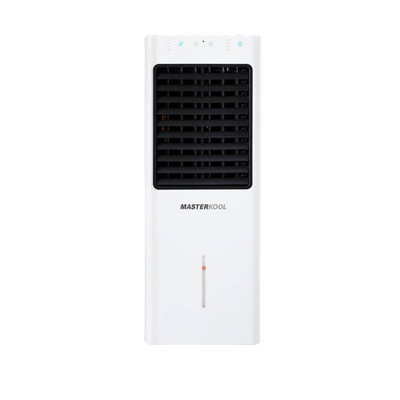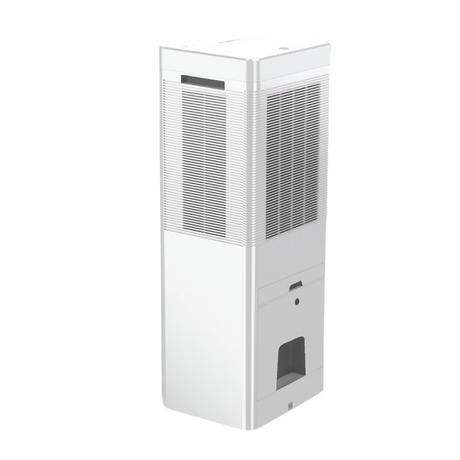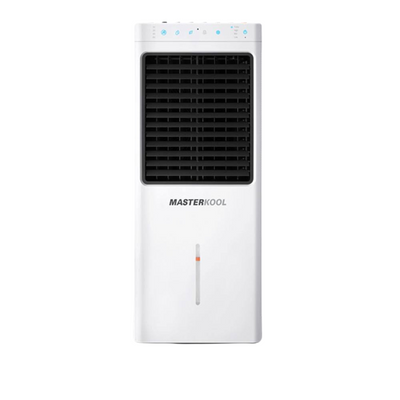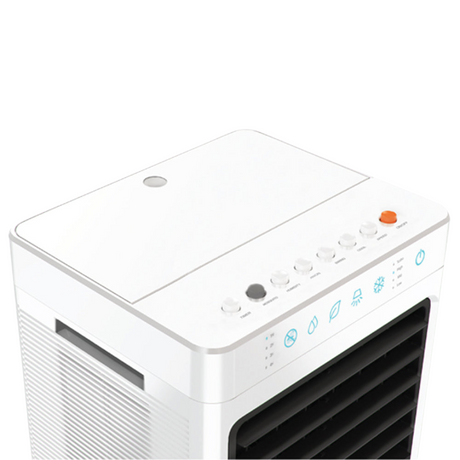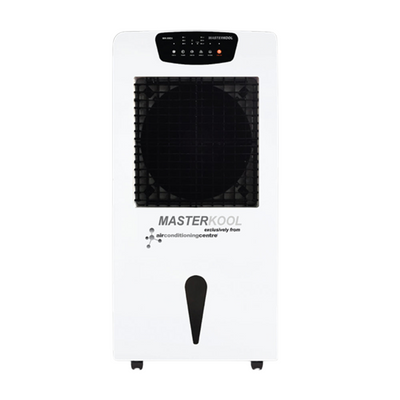

An evaporative cooler is a type of portable cooling product that uses water and airflow to create a cooler, fresher feeling breeze.
It is sometimes called an air cooler, swamp cooler or evaporative air cooler. Although it is often compared with air conditioning, an evaporative cooler is not the same as a portable air conditioner or a fixed air conditioning system.
The main difference is how it cools. An air conditioner removes heat from a room and transfers it elsewhere. An evaporative cooler uses the natural cooling effect of water evaporation to cool the air passing through the unit.
This makes evaporative coolers useful for certain homes, workshops, garages, warehouses, commercial spaces and well-ventilated areas where you want a refreshing airflow without the setup or running costs of traditional air conditioning.
You can browse our current range of evaporative air coolers or read our full evaporative air cooler buyer’s guide.
What Is An Evaporative Cooler?
An evaporative cooler is a cooling unit that uses water evaporation to lower the temperature of the air passing through it.
Most evaporative coolers have a water tank, a fan and internal cooling pads. The cooling pads are soaked with water from the tank. The fan pulls warm air through the wet pads, and as the water evaporates, the outgoing air feels cooler and more refreshing.
This process is known as evaporative cooling. It is a simple, natural cooling method that can work well in the right conditions.
Unlike an air conditioner, an evaporative cooler does not use a refrigeration cycle. It does not normally have an exhaust hose, outdoor unit or refrigerant pipework. It is usually easier to move, simpler to set up and cheaper to run than many air conditioning systems.
How Does An Evaporative Cooler Work?
An evaporative cooler works by moving warm air across water.
Inside the unit, water from the tank keeps the cooling pads damp. The fan draws warm air into the cooler and pushes it through these damp pads. As the water evaporates, heat is absorbed from the air, creating a cooler airflow from the front of the unit.
The process is similar to the cooling feeling you get when a breeze passes over damp skin. The evaporation creates a cooling effect.
This is why evaporative coolers often feel more refreshing than a standard fan. A fan simply moves the existing air around. An evaporative cooler adds water evaporation into the airflow, which can make the air feel cooler.
Is An Evaporative Cooler The Same As Air Conditioning?
No, an evaporative cooler is not the same as air conditioning.
An air conditioner actively removes heat from a room. A portable air conditioner usually vents warm air outside through a hose, while a split system transfers heat outside through an outdoor unit.
An evaporative cooler does not remove heat in the same way. It uses water evaporation to create a cooler airflow, but it does not provide the same level of temperature control as a true air conditioning system.
This distinction is important. If you need to lower the actual room temperature in a bedroom, office or living room, a portable air conditioner or fixed air conditioning system may be the better choice.
If you want a lower energy cooling breeze in a well-ventilated room, workshop or commercial space, an evaporative cooler may be a good option.
You can also read our comparison guide: portable air conditioner vs evaporative cooler.
What Is The Difference Between A Fan And An Evaporative Cooler?
A fan moves air around the room. It can help you feel cooler because moving air helps sweat evaporate from your skin, but it does not add any cooling process of its own.
An evaporative cooler also uses a fan, but it passes air through water-soaked pads before pushing it back into the room. This adds a cooling effect to the airflow.
In simple terms:
- A fan moves room temperature air around.
- An evaporative cooler moves air through water to create a cooler feeling breeze.
- An air conditioner removes heat from the room and vents or transfers it outside.
This makes an evaporative cooler a useful middle ground between a basic fan and a true air conditioning unit.
Where Do Evaporative Coolers Work Best?
Evaporative coolers work best in spaces where there is good airflow and ventilation.
Because they use water evaporation, they perform better when fresh air can move through the space. This helps the cooling effect feel more comfortable and prevents the room from becoming too humid.
Evaporative coolers can work well in:
- Workshops
- Garages
- Warehouses
- Commercial units
- Covered outdoor areas
- Well-ventilated home spaces
- Large open areas
- Spaces where doors or windows can stay open
They are often popular in practical working environments because they can provide a refreshing cooling airflow without needing a window hose or fixed installation.
You can browse our commercial evaporative air coolers for larger spaces or our domestic evaporative air coolers for smaller home use.
Where Do Evaporative Coolers Not Work As Well?
Evaporative coolers are not ideal for every room.
They are usually less effective in sealed spaces with poor ventilation. Because they add moisture to the air, they need some airflow through the room to stay comfortable.
They can also be less effective in humid conditions. When the air already contains a lot of moisture, water evaporation slows down, which reduces the cooling effect.
Evaporative coolers may not be the best choice for:
- Small sealed bedrooms
- Humid rooms
- Spaces with condensation or damp problems
- Rooms where precise temperature control is needed
- Server rooms or equipment rooms needing reliable cooling
- Rooms where windows and doors must stay closed
For these spaces, a portable air conditioner or fixed air conditioning system may be more suitable.
Do Evaporative Coolers Actually Cool A Room?
An evaporative cooler can make the airflow feel cooler and can help reduce the temperature in the right conditions, but it does not cool a room in the same way as air conditioning.
Its performance depends on ventilation, humidity, room size, airflow, water temperature and how the space is used.
In a well-ventilated, dry space, an evaporative cooler can provide a noticeable cooling effect. In a small, sealed or humid room, the effect may be much more limited.
This is why it is important to choose an evaporative cooler for the right job. It is best viewed as a cooling airflow product, not a direct replacement for air conditioning.
Do Evaporative Coolers Need A Window Open?
Evaporative coolers usually work best with a window, door or vent open.
This may sound unusual if you are used to air conditioning, because air conditioners normally work best with windows and doors closed. Evaporative cooling is different.
Because the unit uses water evaporation and adds moisture to the air, fresh airflow helps the cooler perform more effectively. Ventilation allows humid air to leave and fresh air to enter.
For best results, place the evaporative cooler where it can draw in fresh air and push cooler airflow across the space.
Do Evaporative Coolers Need Water?
Yes, evaporative coolers need water in the tank to create the cooling effect.
Most units can still operate as a fan without water, but the evaporative cooling function relies on water being available. Larger coolers may have bigger tanks for longer running time, while smaller domestic coolers may need topping up more often.
Some models also allow ice packs or chilled water to improve the cooling feel, depending on the product design.
Always follow the manufacturer’s instructions for filling, cleaning and maintaining the water tank.
Are Evaporative Coolers Cheap To Run?
Evaporative coolers are usually cheaper to run than portable air conditioners because they mainly use a fan and water pump rather than a refrigeration system.
This can make them attractive for larger ventilated spaces, workshops and commercial areas where running a traditional air conditioning system may not be practical.
However, running cost should not be the only factor. If you need true temperature control, an evaporative cooler may not solve the problem, even if it uses less electricity.
The best choice depends on whether you need low energy airflow or proper air conditioning.
Are Evaporative Coolers Portable?
Many evaporative coolers are portable. They are often fitted with wheels or handles so they can be moved around a room, workshop or commercial space.
This makes them useful for targeted cooling. Instead of cooling an entire building, you can move the unit closer to the area where people are working, exercising or spending time.
For larger commercial spaces, bigger evaporative coolers may still be portable, but they will usually be heavier and need more space around them.
What Are The Benefits Of Evaporative Coolers?
Evaporative coolers offer several useful benefits when used in the right environment.
- Lower energy use: They usually use less electricity than portable air conditioners.
- No exhaust hose: Most evaporative coolers do not need a window hose.
- Portable cooling: Many models can be moved to where they are needed.
- Useful for ventilated spaces: They can work well in workshops, garages and commercial areas.
- Simple setup: Most units only need water and a power socket.
- Fresh airflow: They can create a cooler, more refreshing breeze than a standard fan.
What Are The Limitations Of Evaporative Coolers?
The main limitation is that evaporative coolers are not true air conditioners.
They do not normally provide precise temperature control, and they are not the best option for sealed, humid or damp rooms.
They also need water to work properly and require regular cleaning to keep the water tank and cooling pads fresh.
Before buying, it is important to think about whether your main problem is heat, airflow or humidity.
If the room needs proper cooling with windows closed, look at air conditioning. If the space is ventilated and you want a cooler breeze, an evaporative cooler may be a good choice.
Evaporative Cooler Vs Portable Air Conditioner
The choice between an evaporative cooler and a portable air conditioner depends on what you want the product to do.
Choose an evaporative cooler if you want lower energy cooling airflow in a ventilated room, workshop, garage or commercial space.
Choose a portable air conditioner if you want stronger cooling and actual room temperature reduction in a bedroom, office, living room or enclosed space.
| Question | Best Option |
|---|---|
| I want to lower the room temperature properly | Portable air conditioner |
| I want low energy cooling airflow | Evaporative cooler |
| I cannot use a window hose | Evaporative cooler |
| I need cooling in a bedroom at night | Portable air conditioner or fixed air conditioning |
| I need cooling in a workshop or garage | Evaporative cooler or spot cooling system |
| The room is humid or sealed | Portable air conditioner |
For a full breakdown, read our portable air conditioner vs evaporative cooler guide.
How To Use An Evaporative Cooler Effectively
To get the best from an evaporative cooler, use it in a space with good airflow.
Fill the water tank correctly, position the unit where it can draw in fresh air and aim the airflow towards the area where cooling is needed.
For best results:
- Use the cooler in a ventilated space
- Keep a window, door or vent open
- Fill the water tank as instructed
- Clean the tank and pads regularly
- Position the cooler close enough to feel the airflow
- Avoid using it in damp or poorly ventilated rooms
- Do not expect it to perform like a true air conditioner
Who Should Buy An Evaporative Cooler?
An evaporative cooler is a good choice if you want simple, portable and lower energy cooling airflow.
It is especially suitable for people who want cooling in a space where an exhaust hose or fixed air conditioning system is not practical.
Evaporative coolers can be a good option for:
- Workshops
- Garages
- Warehouses
- Well-ventilated home spaces
- Covered outdoor areas
- Commercial units
- Personal cooling zones
- Large spaces where spot airflow is useful
They are not the best choice if you need precise temperature control, sealed room cooling or strong bedroom cooling during hot nights.
Evaporative Cooler FAQs
What is an evaporative cooler?
An evaporative cooler is a cooling unit that uses water evaporation and airflow to create a cooler feeling breeze. It is not the same as an air conditioner.
How does an evaporative cooler work?
It draws warm air through water-soaked cooling pads. As water evaporates, the airflow from the unit feels cooler and more refreshing.
Does an evaporative cooler need a hose?
Most evaporative coolers do not need an exhaust hose. This is one of the main differences between evaporative coolers and portable air conditioners.
Does an evaporative cooler need water?
Yes, water is needed for the evaporative cooling function. Without water, many units may operate only as a fan.
Do evaporative coolers work in the UK?
Yes, they can work in the UK, especially in well-ventilated spaces. Their performance depends on humidity, airflow, room size and how the space is used.
Can an evaporative cooler cool a bedroom?
It may help the air feel cooler, but it is not usually the best option for sealed bedroom cooling. A portable air conditioner or fixed air conditioning system is usually better if you need stronger temperature reduction.
Are evaporative coolers cheap to run?
They are usually cheaper to run than portable air conditioners because they mainly use a fan and water pump. However, they do not provide the same level of cooling as air conditioning.
Do evaporative coolers make the room damp?
They add moisture to the air, so ventilation is important. In a poorly ventilated or already humid room, the air may feel damp or less comfortable.
Where should I put an evaporative cooler?
Place it where it can draw in fresh air and push cooler airflow towards the area you want to cool. It usually works best near an open door, window or ventilated area.
Is an evaporative cooler better than a fan?
An evaporative cooler can feel cooler than a standard fan because it uses water evaporation as well as airflow. A fan only moves the existing air around.
Final Advice: Is An Evaporative Cooler Right For You?
An evaporative cooler can be a useful cooling solution if you understand what it is designed to do.
It is best for creating a cooler, refreshing airflow in well-ventilated spaces. It is simple to use, portable and usually cheaper to run than portable air conditioning.
However, it is not a direct replacement for air conditioning. If you need strong room temperature reduction, especially in a bedroom, office or enclosed living space, a portable air conditioner or fixed air conditioning system may be more suitable.
If you want low energy cooling airflow for a workshop, garage, commercial area or ventilated room, an evaporative cooler could be a very practical choice.
Explore our evaporative air coolers, compare our portable cooling systems or speak to the CoolEasy team for help choosing the right cooling option.